A garden office in Ireland is the cleanest starting point for many homeowners because it solves a real problem without immediately becoming a second dwelling. You want a quiet workspace, year-round insulation, proper electrics and a room that still feels useful if your job changes.
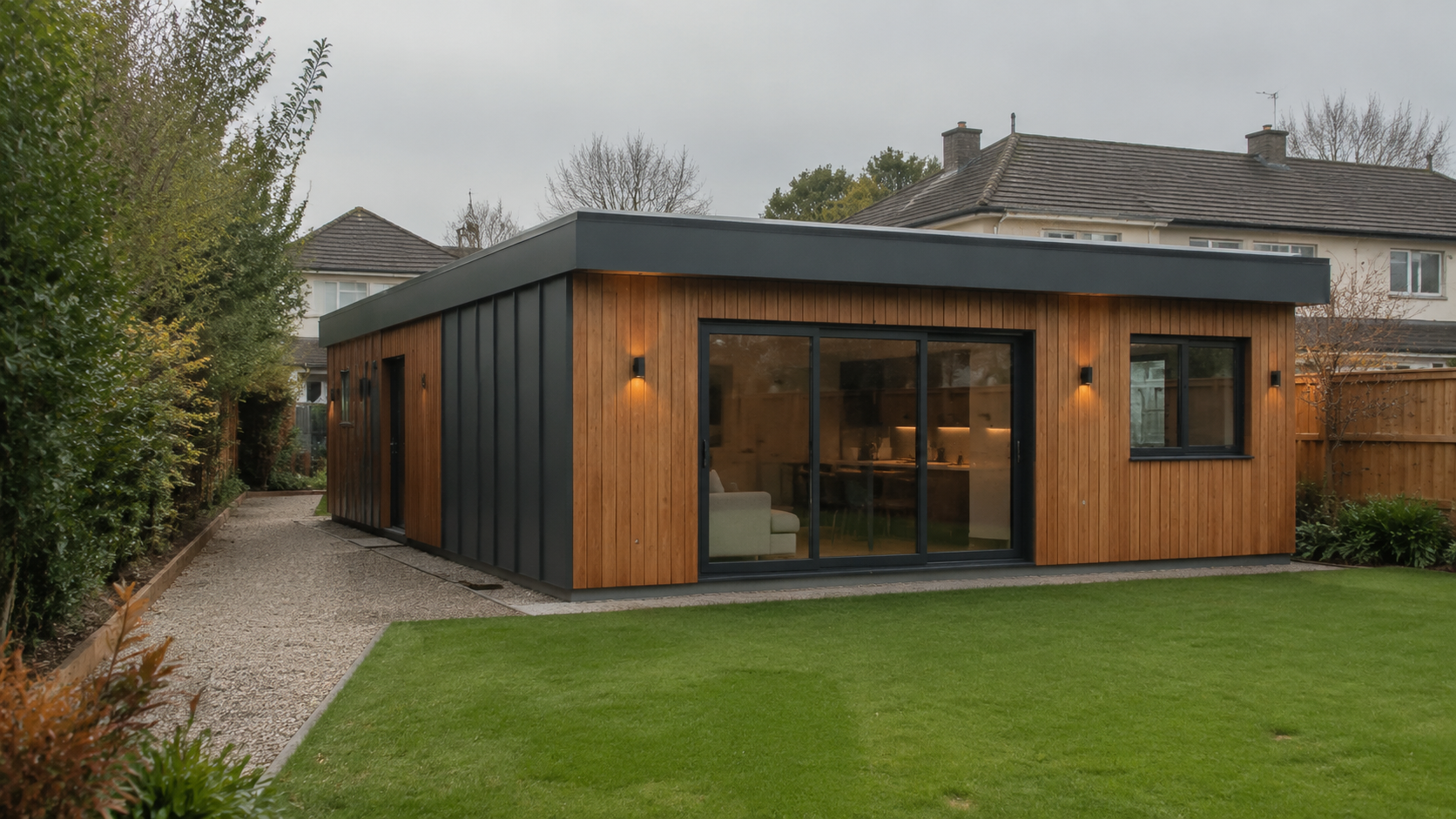 Generated concept image. The layout is illustrative and not a supplier product.
The mistake is buying it like a shed. A good garden office is not just four walls and a socket. It needs to stay warm in January, avoid overheating in July, handle calls without echo, and sit in the garden without causing planning or neighbour problems.
If you are comparing used listings against new supplier quotes, read second hand garden rooms Ireland first. The transport, base, reassembly and electrical costs can change the bargain quickly.
The short answer
If you want a garden office rather than a garden home, keep these checks front and centre:
| Decision | Sensible Irish check |
|---|---|
| Size | Many garden office guides still work around the 25sqm outbuilding exemption, but check the exact conditions |
| Use | Office, studio or gym is different from sleeping or separate living accommodation |
| Services | Electrics are normal; toilets, showers and kitchens raise planning and drainage questions |
| Insulation | Ask for floor, wall and roof build-up, not only "fully insulated" wording |
| Access | Side access, delivery route and base preparation can affect price |
| Future value | Design it so it can become a studio, therapy room, teen room or guest workspace later |
For Garden Gaff, the best lead is usually someone with a clear work-from-home need, a county, a rough size, and a willingness to compare quotes before ordering.
What a garden office costs
Public prices vary because suppliers include different things. GardenRooms.ie says its garden rooms cost approximately €1,700 per square metre before VAT for its standard package, and its homepage shows product ranges starting from €32,000 ex VAT and €38,000 ex VAT. Steeltech says custom garden rooms are priced individually after the local showroom understands the unit.
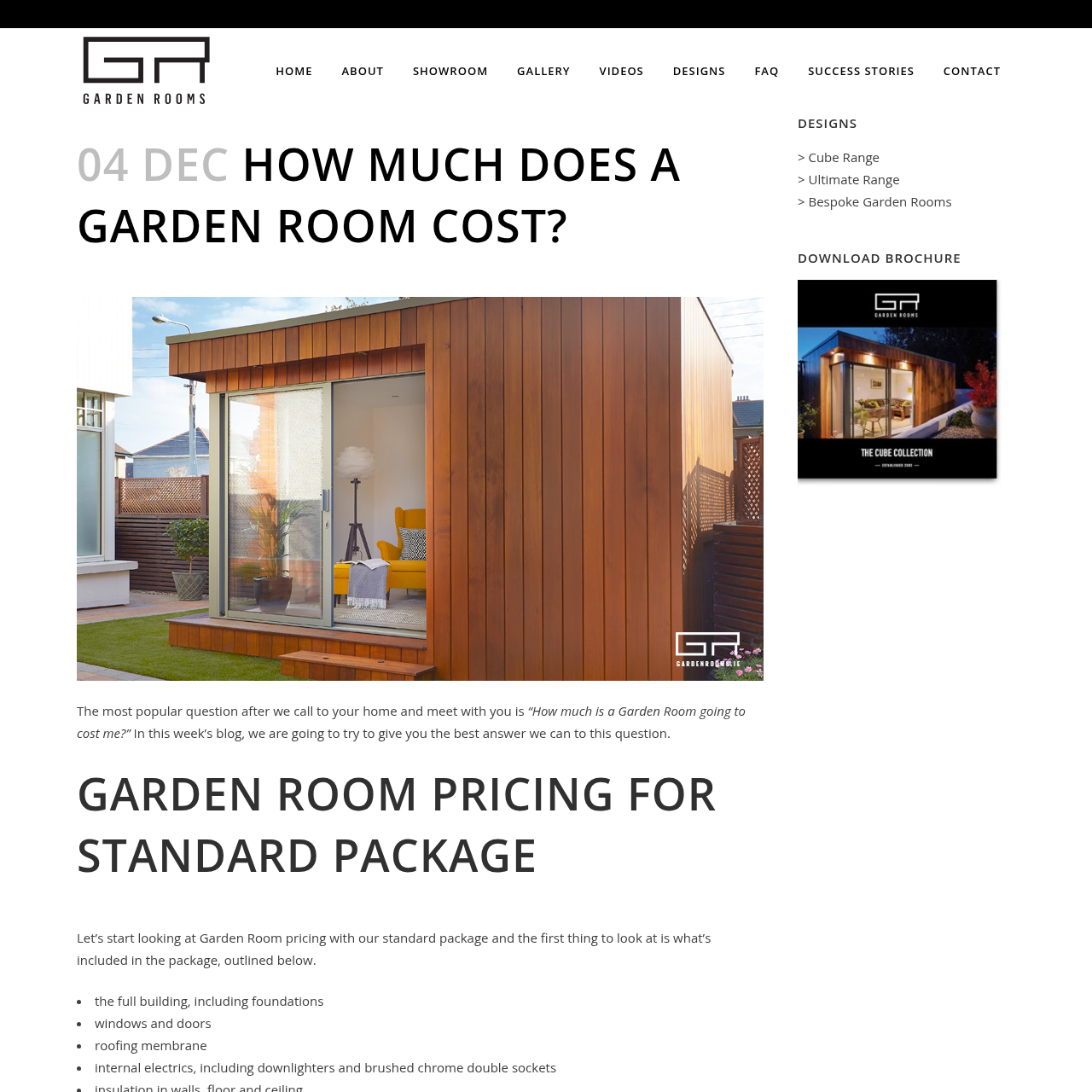 Jina screenshot from GardenRooms.ie showing a real Irish garden-room cost page.
That means a 12sqm, 17sqm or 25sqm office can produce very different quotes depending on specification. A cheaper room may exclude foundations, high-spec glazing, heating, data cabling, plaster finish, exterior lighting or awkward access.
Ask for the quote in writing under these headings:
- Building shell.
- Base or foundations.
- Insulation specification.
- Windows and doors.
- Heating and ventilation.
- Internal electrics and external connection.
- Internet/data route.
- Delivery and installation.
- VAT.
- Exclusions.
The exclusions list is where the real comparison happens.
Planning: office use is not dwelling use
Steeltech's planning guide summarises the common outbuilding logic: a structure may be exempt when it is behind the front wall, stays within the relevant size and height limits, leaves enough private open space, and is not for human habitation. It also says planning is required where a structure is used for human habitation or exceeds limits.
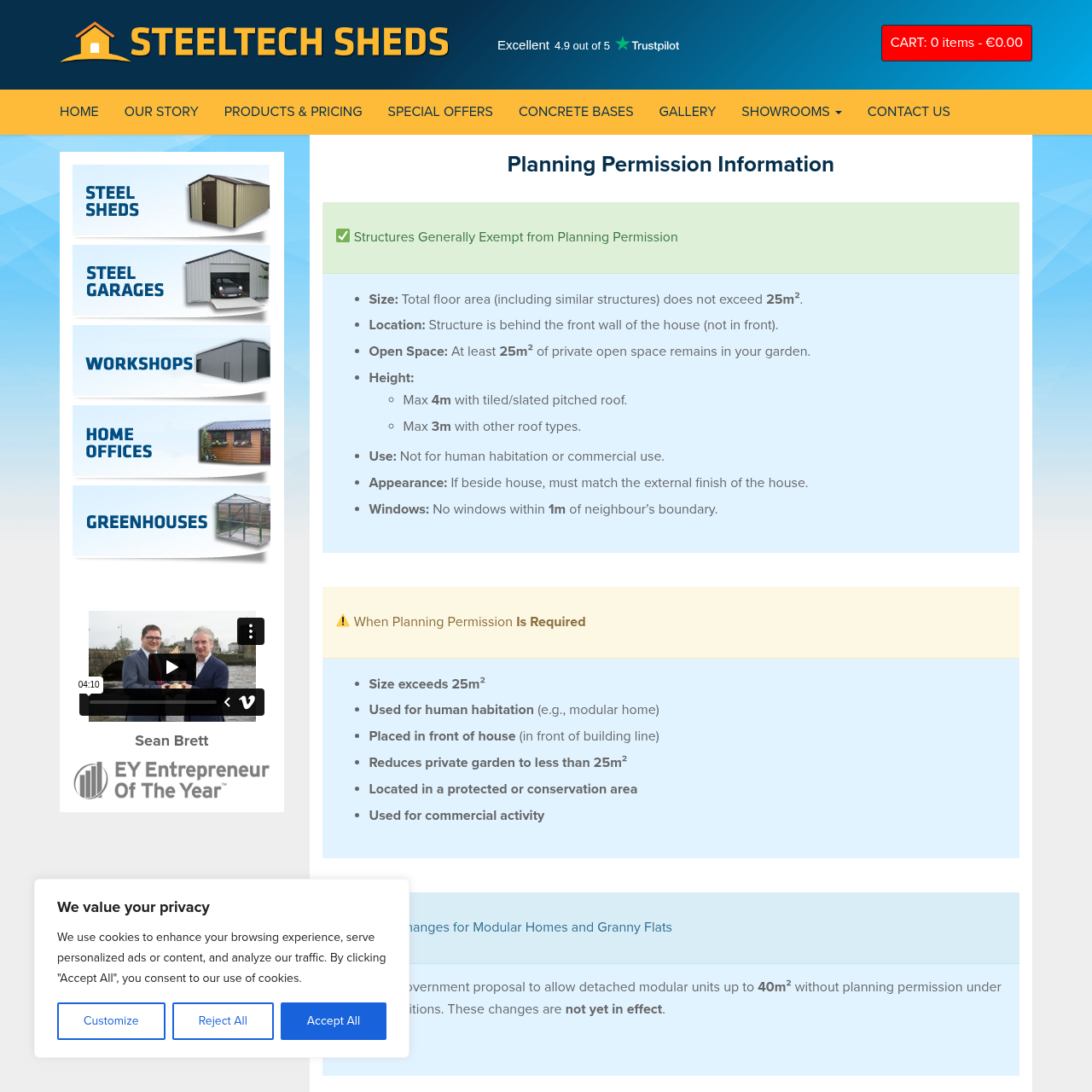 Jina screenshot from a supplier planning page. Always confirm the rules with your local authority.
Citizens Information gives the safer framing: if you build an extension or make other changes, you may need planning permission from your local authority. That is the right mindset. Supplier pages help you understand the market, but your local authority and the actual regulations decide the planning position.
The Government's April 2026 announcement also matters because it says the existing back-garden structure exemption is proposed to rise from 25sqm to 30sqm, and separately discusses 32sqm-45sqm auxiliary habitable dwellings. Those are not the same thing. A garden office remains a non-habitable workspace; an auxiliary dwelling is a different and more serious use.
So do not describe a garden office as a "spare bedroom" in your own notes unless you are ready for a dwelling-style planning conversation.
Should you add a toilet?
A toilet can be useful if the office is used all day, by clients, or by someone with mobility needs. It can also turn a simple project into a drainage and compliance project.
Before adding a toilet, ask:
- Is there a practical wastewater route?
- Will it connect to existing drainage?
- Is a pump needed?
- Will the garden still have enough open space?
- Does the supplier include plumbing or only the shell?
- Does the intended use still count as office use?
- Would a toilet make future conversion to accommodation more likely in the eyes of planners?
A small office without a toilet may be simpler, cheaper and faster. A larger studio with toilet and kitchenette may be better long term, but it needs a different quote and rule check.
Insulation matters more than cladding
Most buyers notice the cladding first. That is understandable, but comfort comes from the hidden layers: floor insulation, wall insulation, roof insulation, glazing, airtightness, heating and ventilation.
Ask suppliers for specifics:
| Specification | Why to ask |
|---|---|
| Wall build-up | Tells you whether "insulated" means basic or year-round |
| Roof build-up | Heat loss and summer overheating often happen here |
| Floor insulation | Cold floors make garden rooms miserable |
| Glazing | Cheap glazing can undo good wall insulation |
| Heating | Electric panel, infrared, heat pump or other route |
| Ventilation | Helps avoid condensation and stale air |
| Acoustic treatment | Useful for calls, therapy, music or content work |
If the supplier cannot explain the build-up clearly, keep looking.
Best uses for an Irish garden office
A garden office works best when it has one main job and two backup jobs. That protects value if your life changes.
Good primary uses:
- Full-time home office.
- Hybrid workspace.
- Therapy or consultation room where local rules allow.
- Design, music or writing studio.
- Gym or yoga room.
- Teen study room.
- Small business admin room.
Useful backup uses:
- Quiet guest workspace.
- Hobby room.
- Storage for office equipment.
- Family room away from the main house.
Riskier uses:
- Sleeping accommodation.
- Independent living.
- Long-term rental.
- Short-term guest letting.
- Client-facing business with regular footfall.
Those riskier uses may still be possible, but they should not be sold to you as a simple garden office.
How to compare suppliers
Do not start with who has the nicest photos. Start with who can answer practical questions:
| Supplier question | Good sign |
|---|---|
| Do you build in my county? | Clear coverage, not vague nationwide claims |
| Is the base included? | Written yes/no |
| Can I see a finished room nearby? | Showroom, case study or viewing route |
| What is the insulation spec? | Specific floor/wall/roof answer |
| What happens if access is tight? | Survey and plan before deposit |
| Are electrics certified? | Clear registered electrical route |
| What warranty applies? | Written warranty terms |
| What is excluded? | Supplier volunteers the exclusions |
Use the supplier comparison directory to shortlist options, then use the quote form below with your county, intended size and use case.
FAQ
Do I need planning permission for a garden office in Ireland?
You may not need planning permission if the structure meets the outbuilding exemption conditions and is not used for human habitation. The exact position depends on size, height, location, remaining garden space, property constraints and use. Confirm with your local authority before ordering.
What size garden office can I build without planning?
Many current guides reference a 25sqm outbuilding threshold, while the April 2026 Government announcement proposes increasing the back-garden structure exemption to 30sqm. Do not rely on the proposed change until the final regulations and conditions are confirmed.
Can a garden office have a toilet?
Yes, but it changes the project. Drainage, plumbing, building work and planning interpretation all need checking. A toilet does not automatically make it a dwelling, but it can push the project into more serious territory.
Is a garden office tax deductible?
That depends on your employment or business position and is outside this guide. Ask an accountant before treating any cost as deductible.
Can I sleep in a garden office?
If it is used for human habitation, you should treat it as a different planning and compliance question. Do not buy a garden office for sleeping accommodation without advice.
What is the best first step?
Measure the garden, decide the main use, take photos of access, and request quotes from suppliers who build in your county. The form below captures those details so the shortlist is useful.